
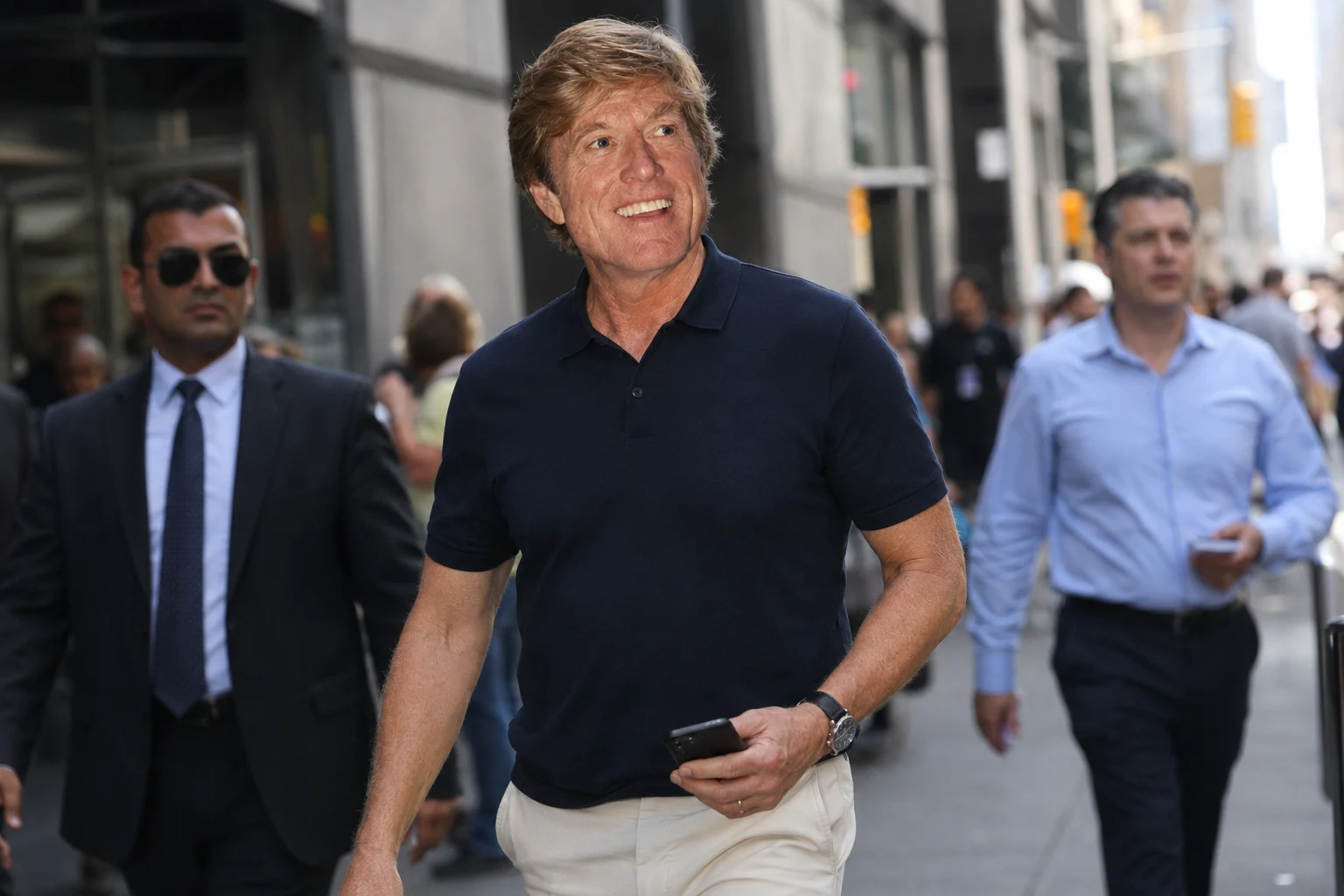
Robert Redford was far more than a Hollywood leading man. Robert Redford became one of the defining figures of American cinema, first as an actor in films such as Butch Cassidy and the Sundance Kid, The Sting, The Way We Were, and All the President’s Men, and later as an acclaimed director, producer, environmental advocate, and champion of independent filmmaking. He died on September 16, 2025, at his home in Sundance, Utah, at the age of 89. His publicist said he died surrounded by those he loved.
What makes his career unusual is the breadth of his influence. Redford was simultaneously a major movie star and an advocate for filmmakers working outside the Hollywood mainstream. His greatest institutional legacy, the Sundance Institute, helped create a lasting platform for independent artists and changed the relationship between American cinema and emerging filmmakers.
Who Is Robert Redford? A Short Biography
| Detail | Information |
|---|---|
| Full Name | Charles Robert Redford Jr. |
| Date of Birth | August 18, 1936 |
| Date of Death | September 16, 2025 |
| Age at Death | 89 |
| Birthplace | Santa Monica, California, U.S. |
| Nationality | American |
| Profession | Actor, director, producer, filmmaker, environmental advocate |
| Years Active | 1950s–2025 |
| Education | American Academy of Dramatic Arts; studied at Pratt Institute and the University of Colorado |
| Famous For | Butch Cassidy and the Sundance Kid, The Sting, All the President’s Men, Ordinary People, and Sundance |
| Height | About 5 ft 10½ in (1.79 m) |
| Father | Charles Robert Redford Sr. |
| Mother | Martha Redford |
| Marital Status | Married twice; widowed at the time of his death |
| Spouse / Partner | Lola Van Wagenen; Sibylle Szaggars |
| Children | Scott, Shauna, James, and Amy |
| Net Worth | Estimated at about $200 million by Celebrity Net Worth; independent estimates are not official |
| Source of Income | Acting, directing, producing, business ventures, investments, and related entertainment activities |
| Official Website | Sundance Institute |
Biographical records identify Redford as Charles Robert Redford Jr., born in Santa Monica on August 18, 1936. He studied at the University of Colorado, later studied painting at the Pratt Institute, and trained at the American Academy of Dramatic Arts before establishing himself as an actor.
The frequently reported $200 million net-worth figure should be treated as an estimate rather than an audited public figure. Celebrity Net Worth gives that figure, while other coverage has repeated it while noting that the precise value of Redford’s estate and assets cannot be established from public information alone.
Robert Redford’s Early Life and Rise to Fame
From Art and Sports to Acting
Redford’s early years did not point toward a conventional Hollywood career. He was interested in sports and art, and his time at the University of Colorado was followed by travel in Europe and further artistic study. Eventually, acting became the discipline in which his creative interests and natural screen presence came together.
His professional acting career developed through television and stage work during the 1950s. The American Academy of Dramatic Arts helped provide formal training, while Broadway gave him early exposure to professional theater. This stage experience became an important foundation for the controlled, understated performance style that later defined many of his best-known film roles.
The Breakthrough of Butch Cassidy and the Sundance Kid
The major turning point came in 1969 with Butch Cassidy and the Sundance Kid. Playing the Sundance Kid opposite Paul Newman, Redford became an international star. The film’s enormous cultural impact also gave a name to what would eventually become one of Redford’s most important achievements: Sundance.
Redford’s partnership with Newman became one of the most memorable actor pairings in American film. Their chemistry combined humor, charisma, and a relaxed confidence that made the film endure well beyond its original theatrical run. For Redford, the role also established the image of the intelligent, charismatic leading man that audiences would associate with him for decades.
Becoming One of Hollywood’s Defining Stars
During the 1970s, Redford built an extraordinary run of films. The Sting reunited him with Newman, while The Way We Were paired him with Barbra Streisand. He also starred as journalist Bob Woodward in All the President’s Men, a film that demonstrated his ability to bring political and investigative material to a broad audience.
Other important films from the period included The Great Gatsby, Three Days of the Condor, The Candidate, and Jeremiah Johnson. Rather than relying exclusively on romantic leading-man roles, Redford increasingly chose projects involving politics, journalism, social conflict, and complicated moral questions. That helped give his career greater substance than his movie-star image initially suggested.
Robert Redford as a Director and Filmmaker
Ordinary People and His Oscar
Redford made his directorial debut with Ordinary People in 1980. The intimate family drama explored grief, guilt, emotional distance, and the consequences of tragedy. It became a major critical and awards success, receiving six Academy Award nominations and winning four, including Best Picture and Best Director for Redford.
Winning the directing Oscar established that Redford was not simply an actor who occasionally moved behind the camera. He had developed a distinct filmmaking sensibility. Ordinary People relied on restrained performances and emotional realism rather than spectacle, showing an interest in character and interpersonal conflict that would continue through his later directing work.
A River Runs Through It and Quiz Show
Redford continued directing throughout the following decades. A River Runs Through It became one of his best-known directorial works, blending family drama, nature, memory, and tragedy. His approach frequently emphasized atmosphere and character rather than relying solely on conventional Hollywood formulas.
With Quiz Show in 1994, Redford returned to the themes of media, public trust, and American institutions. The film examined the 1950s quiz-show scandal and earned multiple Academy Award nominations, including Best Picture and Best Director. Redford’s filmography behind the camera showed a consistent interest in stories about American culture and the pressures placed on individuals by institutions.
A Career That Continued Into His 80s
Even as he moved away from being a conventional leading man, Redford continued taking distinctive roles. All Is Lost in 2013 was particularly striking because he carried almost the entire film as a largely solitary character battling survival at sea. The performance demonstrated how much he could communicate through physical presence, expression, and silence.
Later, he appeared in Captain America: The Winter Soldier and The Old Man & the Gun. The latter, released in 2018, was widely viewed as a fitting late-career role because it allowed Redford to play an aging outlaw with the charm and relaxed confidence that had long been central to his screen identity.
The Sundance Legacy
Why Robert Redford Founded Sundance
Redford’s most consequential contribution may ultimately have happened away from the traditional Hollywood studio system. In 1981, he founded the Sundance Institute to support independent artists and give filmmakers space to develop work outside commercial pressures. The Institute describes its mission as discovering, supporting, and inspiring independent film and media artists.
The idea was closely connected to Redford’s own experience and philosophy. He believed filmmakers needed room to experiment, take creative risks, and develop distinctive voices. The first summer lab was held in Utah in 1981, creating the foundation for programs that would eventually expand into multiple forms of independent storytelling.
How Sundance Changed Independent Film
The Sundance name eventually became synonymous with independent cinema. What began as an artist-development initiative grew into a major cultural institution supporting filmmakers, screenwriters, documentary creators, theater artists, and other storytellers. The Sundance Film Festival became an important meeting place for emerging filmmakers and audiences looking for work outside mainstream studio releases.
Redford’s contribution was therefore larger than launching a festival. He helped establish an ecosystem in which unconventional films could be developed, discovered, discussed, and distributed. Sundance became one of the clearest examples of how an individual Hollywood star could use his influence to build opportunities for artists who had not yet entered the mainstream.
The Meaning of Sundance to His Legacy
The Sundance Institute continued to describe Redford as its founder and emphasize the importance of his commitment to independent voices after his death. Its tribute states that his vision helped inspire generations of artists and redefine cinema in the United States and around the world.
That legacy is particularly important because Redford did not simply advocate for independent filmmaking in interviews. He built an organization around the principle. The result was a lasting institution rather than a temporary campaign, allowing his influence to continue through artists and films long after his own acting career had ended.
Robert Redford’s Personal Life and Values
Marriage and Family
Redford married Lola Van Wagenen in 1958, and they had four children: Scott, Shauna, James, and Amy. Their first child, Scott, died as an infant, while their son James died in 2020. Daughters Shauna and Amy survived him.
In 2009, Redford married German artist Sibylle Szaggars. They had met years earlier at his Sundance resort and remained together until his death. Szaggars was also involved in environmental and artistic work, reflecting interests that were important to Redford throughout his later life.
Environmental Advocacy
Redford’s connection to nature was not simply an extension of the Sundance brand. He was a longtime environmental advocate and conservationist. The Sundance Institute describes him as an ardent conservationist and environmentalist whose interests in nature and social responsibility remained central to his life.
His environmental interests also influenced where he lived and the projects he supported. Sundance, Utah, became both a personal retreat and a creative community. For Redford, the mountains represented a place where art, nature, independence, and privacy could coexist.
Political and Social Engagement
Redford also used his public profile to speak about political and social issues. His advocacy extended to environmental protection, artistic freedom, and the role of public institutions in supporting the arts. His support for the National Endowment for the Arts, for example, was connected to the organization’s early assistance to Sundance Institute.
This combination of entertainment and civic engagement helped distinguish him from the traditional Hollywood celebrity. He was interested not only in making successful films but also in what films could say about American society and how artists could contribute to public discussion.
Robert Redford’s Best-Known Movies
Essential Films From His Acting Career
Several films define Redford’s reputation as an actor. Butch Cassidy and the Sundance Kid established his movie-star status, while The Sting demonstrated the enduring appeal of his partnership with Paul Newman. The Way We Were became one of his most recognizable romantic dramas, and All the President’s Men showcased his interest in journalism and political accountability.
His other widely remembered performances include The Candidate, Three Days of the Condor, The Natural, Out of Africa, Sneakers, Indecent Proposal, All Is Lost, and The Old Man & the Gun. Together, these movies show the range of a career that moved comfortably between romance, political drama, thriller, sports storytelling, adventure, and independent film.
Films That Show His Work Behind the Camera
For viewers interested in Redford as a filmmaker rather than simply a star, Ordinary People is the essential starting point. The film earned him the Academy Award for Best Director and remains one of the clearest examples of his restrained, character-focused approach.
A River Runs Through It and Quiz Show are also central to understanding his directorial career. The films reveal recurring Redford interests: family relationships, memory, moral choices, institutions, and the tension between individual values and social pressures.
Awards and Recognition
Redford’s career brought major recognition from the Academy and other international institutions. He won the Academy Award for Best Director for Ordinary People and later received an honorary Academy Award recognizing his contribution to cinema. He also received the Cecil B. DeMille Award from the Golden Globes and other lifetime-achievement honors.
In 2017, the Venice Film Festival honored him with its Golden Lion for Lifetime Achievement, while in 2019 he received an Honorary César in France. These honors reflected the international reach of a career that had begun in American theater and expanded into acting, directing, producing, independent cinema, and cultural advocacy.
Robert Redford’s Net Worth and Sources of Income
How Much Was Robert Redford Worth?
Robert Redford’s net worth is commonly estimated at around $200 million. Celebrity Net Worth reported that figure at the time of his death, while other outlets have repeated the estimate. However, it is important to distinguish an estimated celebrity net worth from a verified accounting of an individual’s estate.
His wealth reflected several decades of work rather than acting alone. Redford earned income as an actor, director, and producer, while also participating in business and property ventures. His long career gave him opportunities to build assets outside individual film salaries.
Beyond Acting Salaries
Redford’s business interests were connected in part to the Sundance name and to real estate. He also had interests associated with the Sundance brand and independent entertainment. Some ventures were successful while others did not perform as expected, which is one reason simple net-worth figures should not be interpreted as a precise measure of cash or liquid assets.
Ultimately, his financial story is less significant than what he did with the platform created by his success. Rather than remaining solely a highly paid actor, Redford invested much of his influence in filmmaking, conservation, and artist development.
Robert Redford’s Lasting Legacy
More Than a Movie Star
Redford’s appeal lasted because his career contained several distinct chapters. He became a major star, then challenged the expectations attached to that status by directing serious films and supporting independent artists. His work demonstrated that a successful actor could also become an influential filmmaker and institution builder.
His most enduring performances remain part of the history of American cinema, but his influence extends beyond those films. Sundance gave generations of filmmakers access to resources, mentorship, audiences, and opportunities that might otherwise have been difficult to find.
A Different Model of Hollywood Influence
Redford’s career offers a useful example of how celebrity can be transformed into cultural infrastructure. He could have concentrated exclusively on starring roles, yet he spent decades developing an organization designed to help other storytellers find their voices.
That choice became one of the defining features of his professional identity. The Sundance Institute continues its work supporting independent artists, meaning that Redford’s impact can still be measured through the creative community he helped establish.
Remembering Robert Redford
When Redford died in 2025, tributes focused not only on the iconic actor but also on the filmmaker, environmentalist, and independent-cinema advocate. He left behind a body of work that spans more than half a century, from classic Hollywood productions to intimate dramas and independent projects.
His legacy ultimately rests on two complementary achievements: he helped define what a modern American movie star could look like, and he helped create space for filmmakers who did not fit the traditional studio model. Few careers have combined those two roles so effectively.
Frequently Asked Questions About Robert Redford
Q: Who was Robert Redford?
A: Robert Redford was an American actor, director, producer, and environmental advocate best known for films including Butch Cassidy and the Sundance Kid, The Sting, All the President’s Men, and Ordinary People. He also founded the Sundance Institute in 1981, helping make independent filmmaking a major part of American film culture.
Q: When did Robert Redford die?
A: Robert Redford died on September 16, 2025, at his home in Sundance, Utah. He was 89. His publicist said he was surrounded by family and loved ones.
Q: What was Robert Redford’s most famous movie?
A: There is no single definitive answer, but Butch Cassidy and the Sundance Kid, The Sting, and All the President’s Men are among the films most closely associated with his acting career. As a director, Ordinary People is especially important because it won him the Academy Award for Best Director.
Q: Did Robert Redford win an Oscar?
A: Yes. Redford won the Academy Award for Best Director for Ordinary People at the 1981 Academy Awards. The film received six nominations and won four Oscars, including Best Picture and Best Director. He later received an honorary Academy Award recognizing his broader contribution to cinema.
Q: What is Robert Redford’s legacy?
A: Redford’s legacy combines classic film performances, acclaimed directing, environmental advocacy, and his founding of the Sundance Institute. His work helped strengthen independent cinema by giving emerging artists opportunities to develop projects outside the traditional Hollywood system.
Conclusion
Robert Redford’s career was remarkable because it never stopped evolving. He began as a stage and television actor, became one of Hollywood’s most recognizable stars, moved successfully into directing, and ultimately devoted enormous energy to independent cinema and environmental causes. His performances in films such as Butch Cassidy and the Sundance Kid, The Sting, and All the President’s Men secured his place in movie history, while Ordinary People established his credentials behind the camera.
Yet the most lasting part of his legacy may be Sundance. By creating an institution dedicated to independent artists, Redford helped influence generations of filmmakers rather than simply adding to his own filmography. His life remains an example of how a Hollywood career can evolve into something much larger: a lasting contribution to cinema, culture, artistic freedom, and the natural world.
Read About : jay z