
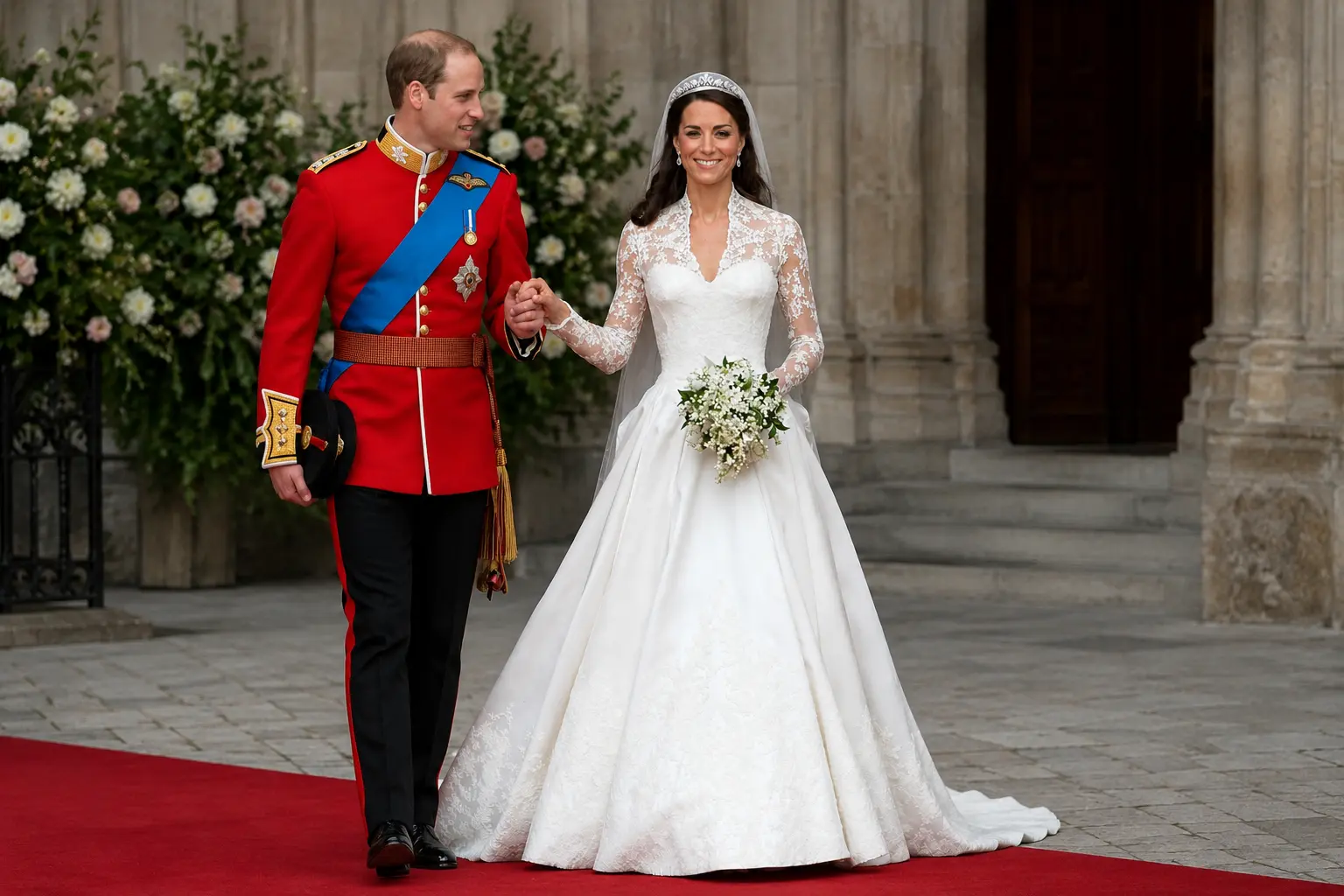
When people think of modern royal weddings, the Kate Middleton wedding dress is often the first image that comes to mind. Worn on April 29, 2011, when Catherine Middleton married Prince William at Westminster Abbey, the gown quickly became one of the most famous wedding dresses in history. Its elegant blend of tradition, craftsmanship, and contemporary design captivated millions of viewers around the world and influenced bridal fashion for years afterward.
Designed by Sarah Burton for Alexander McQueen, the dress represented more than a royal fashion moment. It showcased British artistry, celebrated heritage, and reflected Kate’s personal style. More than a decade later, it remains a benchmark for timeless bridal elegance. This article explores the design, symbolism, creation process, and lasting influence of the iconic gown.
The Designer Behind the Dress
Sarah Burton and Alexander McQueen
After months of intense speculation before the royal wedding, it was revealed that Sarah Burton, creative director of Alexander McQueen, designed Kate’s gown. Burton had succeeded the late Lee Alexander McQueen and was already respected for her exceptional tailoring and craftsmanship.
Kate reportedly chose Alexander McQueen because of the fashion house’s reputation for technical excellence and artistic vision. The goal was to create a dress that balanced tradition and modernity while showcasing the best of British fashion. Burton later described the project as an extraordinary honor and one of the defining moments of her career.
Why the Choice Was So Significant
The selection of a British designer carried symbolic importance. Royal weddings often serve as international showcases for British culture, craftsmanship, and creativity. By choosing Burton and Alexander McQueen, Kate highlighted a leading British fashion house during a globally watched event.
The decision also reflected her evolving public image. Rather than choosing an overly dramatic gown, she opted for a sophisticated design that felt regal yet approachable. That balance became a hallmark of her fashion identity in the years that followed.
Design Details of the Wedding Dress
The Lace Bodice and Sleeves
One of the gown’s most recognizable features was its intricate lace bodice with long sleeves. The lace created an elegant V-shaped neckline and offered a refined alternative to strapless wedding dress trends that dominated the era.
The floral lace appliqué incorporated roses, thistles, daffodils, and shamrocks, representing England, Scotland, Wales, and Northern Ireland. These national symbols added a meaningful layer of symbolism while reinforcing the dress’s connection to British heritage. The lace work was completed with extraordinary precision by artisans from the Royal School of Needlework.
The Structured Silhouette
The bodice featured subtle corsetry inspired by Victorian design traditions. It emphasized Kate’s waist while maintaining a graceful and natural appearance. This structure reflected an Alexander McQueen signature, combining historical influences with modern tailoring.
The dress was crafted from ivory and white satin gazar, creating a clean architectural shape without appearing heavy. The result was a silhouette that felt timeless rather than trend-driven, helping the gown remain relevant more than a decade later.
The Skirt and Train
The full skirt unfolded elegantly from the fitted bodice and flowed into a train measuring just under three meters. Unlike some historic royal gowns with exceptionally long trains, Kate’s train was relatively modest, striking a balance between grandeur and practicality.
The skirt’s design echoed the opening petals of a flower and moved beautifully as she walked through Westminster Abbey. Fashion critics praised the gown for achieving royal drama without overwhelming the wearer.
Symbolism Hidden Within the Gown
Tradition Meets Modern Royal Style
A major reason the dress became so celebrated was its ability to bridge different eras of royal fashion. It incorporated classic elements such as lace sleeves, structured tailoring, and symbolic embroidery while maintaining a fresh, contemporary appearance.
Many observers compared its timeless elegance to the wedding dress worn by Grace Kelly, another bridal look often regarded as one of history’s most influential gowns. At the same time, Kate’s dress established its own identity rather than simply replicating past royal styles.
The “Something Blue” Detail
Like many brides, Kate followed the wedding tradition of including “something blue.” A blue ribbon was discreetly sewn inside the gown, remaining hidden from public view while adding personal symbolism to the dress.
This small detail demonstrated how the gown blended royal ceremony with familiar wedding customs. While the public focused on the dramatic lace and elegant silhouette, subtle touches like this contributed to the dress’s deeper meaning.
Craftsmanship at the Highest Level
The creation process reflected remarkable attention to detail. Artisans handling the lace reportedly followed strict procedures to maintain cleanliness and precision throughout the embroidery process. The project involved countless hours of skilled handwork.
The emphasis on traditional techniques reinforced the dress’s status as a celebration of British craftsmanship. Every element, from the lace motifs to the tailored construction, demonstrated a commitment to excellence rarely seen in modern fashion.
The Impact on Bridal Fashion
A Global Wedding Trend
The influence of the Kate Middleton wedding dress was immediate. Bridal designers around the world saw increased demand for lace sleeves, structured bodices, and elegant A-line silhouettes. Brides who had previously favored strapless gowns began embracing more classic designs.
Wedding retailers and designers frequently cited the gown as one of the most influential bridal looks of the twenty-first century. Its impact extended across luxury couture houses as well as mainstream bridal collections.
The Rise of the “Royal Bride” Look
Following the wedding, countless brides sought dresses inspired by Kate’s style. The combination of modesty, sophistication, and romance created what many described as the modern royal bride aesthetic.
The gown’s popularity also proved that timeless design often outlasts short-term fashion trends. More than a decade later, lace sleeves and elegant tailored silhouettes remain common choices in bridal collections around the world.
A Lasting Cultural Legacy
The dress became more than a fashion statement. It evolved into a cultural symbol representing a major moment in modern royal history. When displayed at Buckingham Palace after the wedding, it attracted enormous public interest and further cemented its iconic status.
Fashion historians continue to reference the gown as a defining example of how clothing can communicate national identity, personal style, and historical continuity simultaneously.
Frequently Asked Questions
Q: Who designed Kate Middleton’s wedding dress?
A: Kate Middleton’s wedding dress was designed by Sarah Burton for Alexander McQueen. Burton worked closely with Kate to create a gown that combined traditional royal elegance with contemporary design.
Q: What was special about the lace on the dress?
A: The lace featured floral motifs representing the nations of the United Kingdom, including roses, thistles, daffodils, and shamrocks. Skilled artisans carefully appliquéd the lace by hand to achieve the final design.
Q: How long was Kate Middleton’s wedding dress train?
A: The train measured just under three meters in length. It provided a regal appearance while remaining more understated than some historic royal wedding trains.
Q: Did the dress contain any hidden details?
A: Yes. A blue ribbon was sewn inside the gown as Kate’s “something blue,” following a traditional wedding custom.
Q: Why is Kate Middleton’s wedding dress considered iconic?
A: The gown is celebrated for its timeless design, exceptional craftsmanship, symbolic details, and lasting influence on bridal fashion. It successfully blended royal tradition with modern elegance, inspiring brides around the world.
Conclusion
The Kate Middleton wedding dress remains one of the most influential bridal creations of modern times. Designed by Sarah Burton for Alexander McQueen, the gown combined intricate lace, expert tailoring, national symbolism, and timeless elegance in a way that resonated across generations. Its balance of tradition and modernity helped define a new era of royal fashion while inspiring countless brides worldwide.
More than a decade after the royal wedding, the dress continues to be admired for its beauty, craftsmanship, and cultural significance. Whether viewed as a fashion masterpiece or a historic royal garment, it stands as a lasting symbol of sophistication and enduring style.
Read About : aubrey plaza bikini