
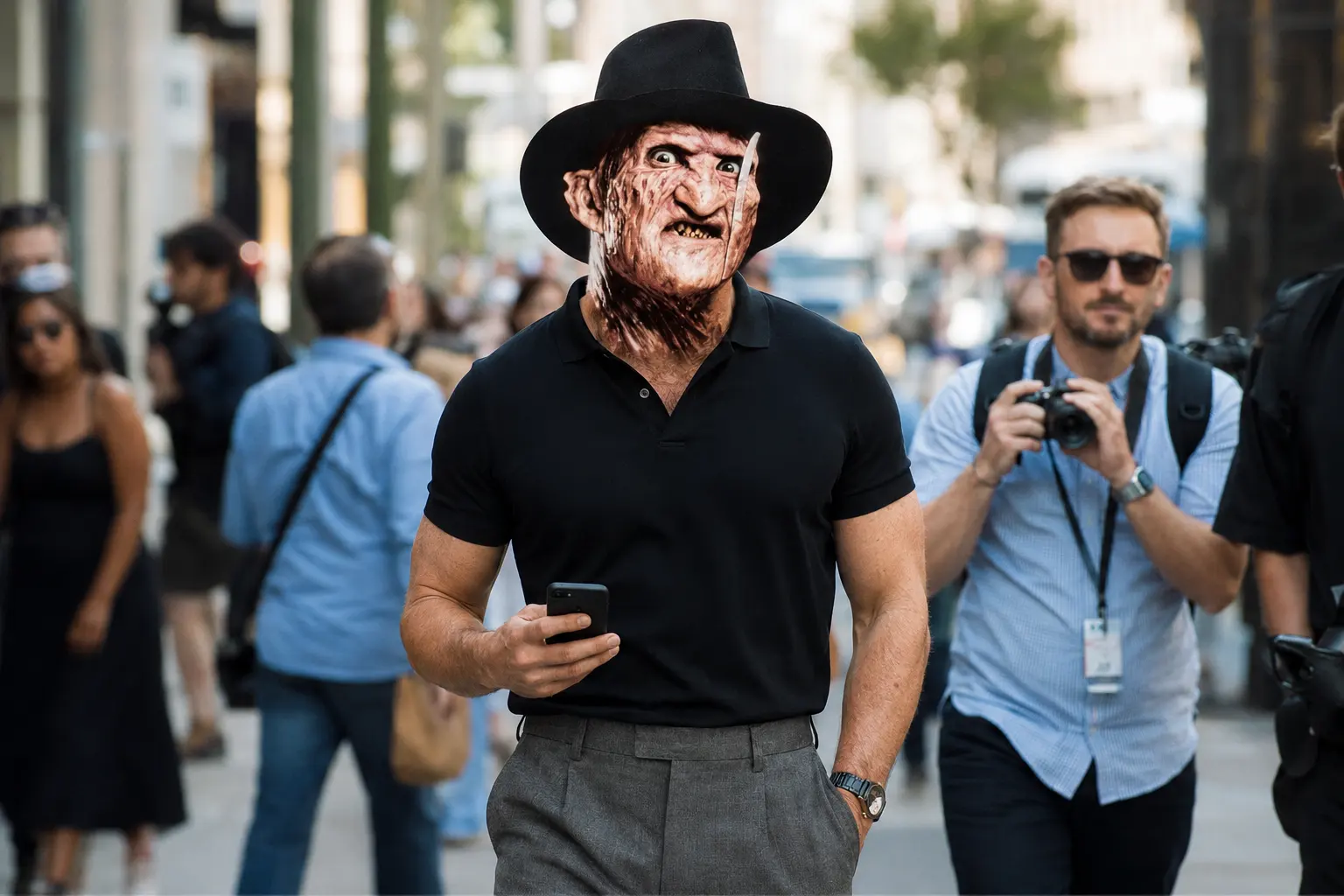
Few fictional villains have left a mark on popular culture quite like Freddy Krueger. Instantly recognizable by his burned face, red-and-green striped sweater, fedora, and razor-bladed glove, Freddy became one of horror’s most enduring characters after debuting in A Nightmare on Elm Street (1984). Created by filmmaker Wes Craven, the character transformed the slasher genre by attacking victims in the one place they could never truly escape—their dreams.
This article explores Freddy Krueger’s origins, his role in the A Nightmare on Elm Street franchise, the meaning behind his terrifying powers, his cultural impact, and why he remains one of the greatest horror villains ever created.
Who Is Freddy Krueger?
Freddy Krueger is a fictional character and the central antagonist of the A Nightmare on Elm Street film series. Created by Wes Craven, Freddy first appeared in the original 1984 film, where he is portrayed by Robert Englund. After being killed by the parents of his victims, Freddy returns as a supernatural entity capable of invading people’s dreams. Anyone who dies in their dreams also dies in reality, making sleep itself a terrifying threat.
Unlike traditional slasher villains who stalk victims in the physical world, Freddy manipulates nightmares, using fear, psychological torment, and surreal dream logic before delivering his fatal attacks.
The Origin of Freddy Krueger
Wes Craven wanted to create a horror villain unlike anything audiences had seen before. Rather than relying on physical pursuit alone, he imagined a monster who could strike while people slept.
Within the fictional story, Freddy was a notorious child murderer who escaped justice due to a legal technicality. Enraged parents took revenge by trapping him inside a boiler room and setting it on fire. After his death, supernatural forces allowed Freddy to return as a dream-based killer, giving him extraordinary abilities whenever his victims fell asleep.
Craven also revealed that the idea for Freddy came from several real-life inspirations, including newspaper reports about mysterious deaths during sleep, a frightening childhood encounter with a disfigured stranger, and even the name of a school bully.
Why Freddy Krueger Is So Different From Other Horror Villains
Freddy stands apart because he doesn’t simply chase victims through dark hallways or abandoned buildings.
Instead, he attacks inside dreams where normal rules no longer exist. Gravity disappears, impossible landscapes emerge, and victims struggle to distinguish dreams from reality.
This concept allowed filmmakers to create imaginative horror sequences that blended psychological fear with supernatural fantasy. Freddy often toys with victims before attacking, making his appearances both terrifying and unpredictably creative.
Unlike silent killers such as Michael Myers or Jason Voorhees, Freddy is also known for his dark humor, sarcastic one-liners, and cruel confidence. Robert Englund’s performance balanced menace with theatrical personality, helping the character become instantly recognizable across generations.
Freddy Krueger’s Signature Appearance
Several visual elements combine to create Freddy’s unforgettable look.
His most famous features include:
- Burned and scarred skin
- Brown fedora
- Red-and-green striped sweater
- Leather glove fitted with razor-sharp blades
- Distinctive raspy voice
- Sinister smile
The bladed glove has become one of horror cinema’s most iconic weapons. According to Robert Englund, even Freddy’s fedora became an important creative decision during production, helping define the character’s silhouette and identity.
Freddy’s Powers Explained
Dream Manipulation
Freddy possesses nearly limitless power inside dreams. He controls environments, changes his appearance, creates terrifying illusions, and traps victims within nightmares.
Reality Through Dreams
One of Freddy’s most frightening abilities is that injuries suffered during dreams often become fatal in the real world. This removes the usual safety of waking up from a nightmare.
Fear Makes Him Stronger
Throughout much of the franchise, Freddy becomes more powerful as people continue fearing and remembering him. Fear fuels his supernatural existence, making him especially dangerous whenever his legend spreads.
Shape-Shifting
Freddy frequently transforms into monsters, animals, giant versions of himself, or distorted human forms, allowing every dream encounter to feel unique.
The A Nightmare on Elm Street Franchise
The success of the original film launched one of horror’s biggest franchises.
Major entries include:
- A Nightmare on Elm Street (1984)
- Freddy’s Revenge (1985)
- Dream Warriors (1987)
- The Dream Master (1988)
- The Dream Child (1989)
- Freddy’s Dead: The Final Nightmare (1991)
- Wes Craven’s New Nightmare (1994)
- Freddy vs. Jason (2003)
- A Nightmare on Elm Street (2010 reboot)
While reception varied across sequels, the original film and Dream Warriors are often considered among the franchise’s strongest installments.
Robert Englund’s Defining Performance
For many fans, Freddy Krueger and Robert Englund are inseparable.
Englund portrayed Freddy throughout nearly every original film, bringing a unique combination of horror, dark comedy, physical acting, and theatrical expression that elevated the character beyond a typical slasher villain.
His performance became one of the most recognizable in horror history, and even decades later many viewers still associate Freddy primarily with Englund rather than later interpretations.
The 2010 Reboot
In 2010, A Nightmare on Elm Street was rebooted with Jackie Earle Haley taking over the role.
The remake offered a darker and more serious interpretation while redesigning Freddy’s appearance to resemble realistic burn injuries.
Although Haley’s acting received praise from some critics, many fans felt the reboot lacked the imagination, humor, and dreamlike atmosphere that made the original films memorable. As a result, Robert Englund’s portrayal remains the definitive version for most audiences.
Freddy Krueger’s Influence on Pop Culture
Freddy’s influence extends far beyond movies.
He has appeared in:
- Comic books
- Novels
- Television specials
- Video games
- Collectible figures
- Halloween costumes
- Merchandise
- Crossover events
One of his best-known gaming appearances was as a downloadable fighter in Mortal Kombat (2011), introducing the character to a new generation of players.
His image has become shorthand for nightmares themselves, making him one of the few horror characters instantly recognizable even by people who have never watched the films.
Why Freddy Krueger Still Matters
More than forty years after his debut, Freddy remains relevant because his central idea is timeless.
Everyone dreams.
Everyone experiences nightmares.
By turning sleep into something dangerous, A Nightmare on Elm Street created a fear that audiences immediately understood. The films also blended psychological horror, fantasy, and surreal visual storytelling in ways that continue to inspire filmmakers today.
Discussions about future reboots or sequels also continue, with Robert Englund suggesting that any new interpretation should avoid simply recreating the original film and instead offer a fresh perspective on the mythology.
Frequently Asked Questions
Who created Freddy Krueger?
Freddy Krueger was created by filmmaker Wes Craven for the original A Nightmare on Elm Street released in 1984. Craven combined real-life inspirations with supernatural horror to invent one of cinema’s most memorable villains.
Who played Freddy Krueger?
Robert Englund portrayed Freddy Krueger throughout the original film series and became closely identified with the character. In the 2010 reboot, Freddy was played by Jackie Earle Haley.
Why does Freddy attack people in their dreams?
Within the franchise, Freddy exists as a supernatural dream entity after his death. Dreams are where he possesses the greatest power, allowing him to manipulate reality, terrify victims, and kill them while they sleep.
Is Freddy Krueger based on a real person?
No. Freddy Krueger is fictional. However, Wes Craven drew inspiration from real newspaper stories about unexplained deaths during sleep, a frightening childhood encounter, and a school bully whose name influenced the character.
Why is Freddy Krueger considered a horror icon?
Freddy introduced an original concept by making dreams the setting for horror. Combined with Robert Englund’s unforgettable performance, distinctive appearance, memorable dialogue, and decades of successful films, he became one of the defining figures of modern horror cinema.
Conclusion
Freddy Krueger remains one of the most influential villains in film history because he transformed a universal human experience into a source of terror. His dream-based powers, unforgettable appearance, razor glove, and psychological approach to horror distinguished him from every slasher who followed. Created by Wes Craven and immortalized by Robert Englund, Freddy helped redefine the horror genre and inspired countless films, games, and pop culture references. Decades after his first appearance, the nightmare continues, proving that some fictional monsters never fade from our imagination—even after we wake up.
Read About : drew starkey