
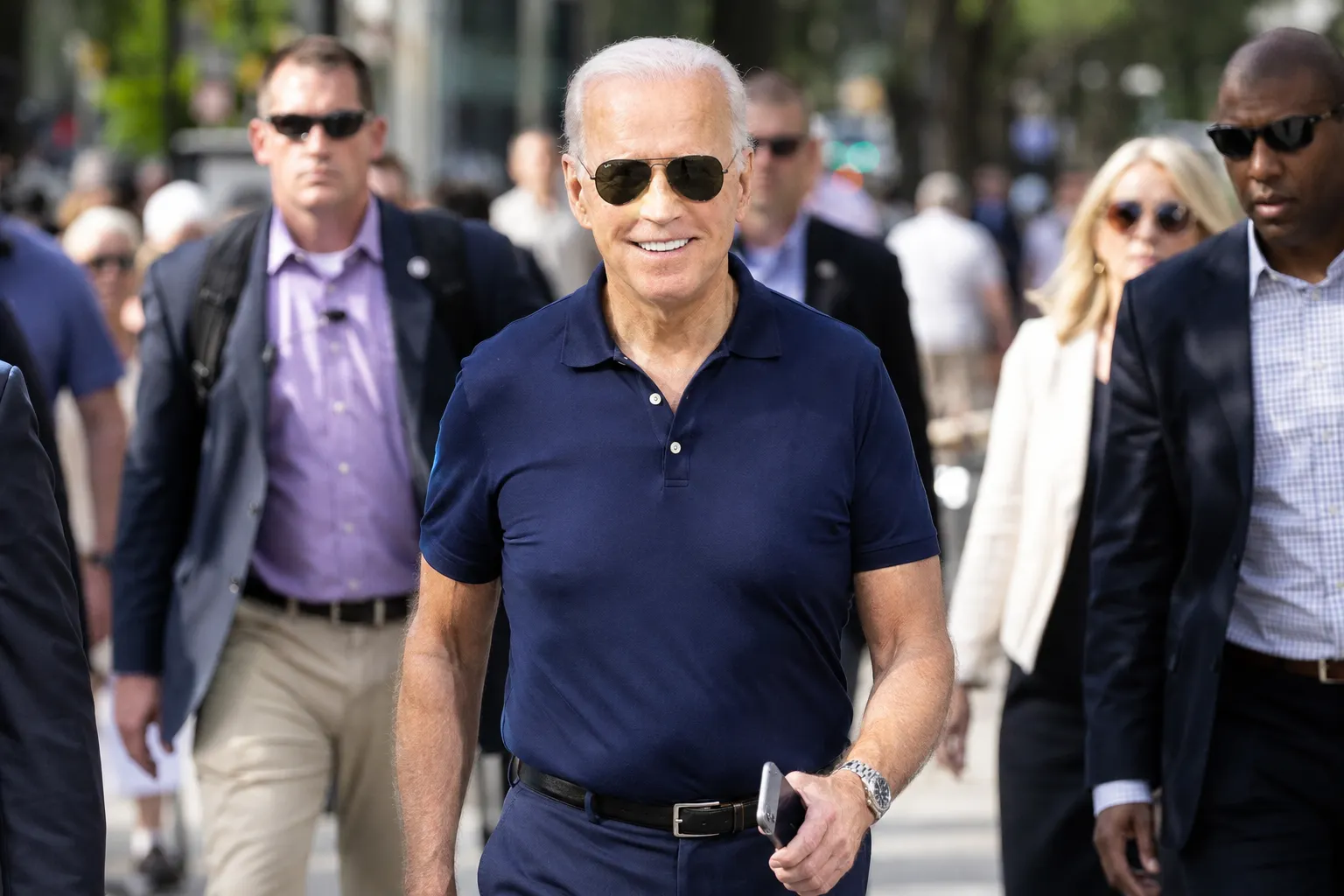
Joe Biden is an American politician who served as the 46th president of the United States from 2021 to 2025 and previously represented Delaware in the U.S. Senate for 36 years. He also served as Barack Obama’s vice president from 2009 to 2017, making his political career one of the longest in modern American national politics.
Born in Scranton, Pennsylvania, in 1942, Biden entered public life at a relatively young age and built his career around law, the Senate, foreign policy, and domestic legislation. His life has also been marked by significant personal tragedies, including the deaths of his first wife, Neilia, and daughter Naomi, and later his son Beau. As of 2026, Biden is a former president, while his health has become a major part of recent public discussion following reports that his prostate cancer has progressed.
Who Is Joe Biden? A Short Biography
| Detail | Information |
|---|---|
| Full Name | Joseph Robinette Biden Jr. |
| Date of Birth | November 20, 1942 |
| Age | 83 in 2026 |
| Birthplace | Scranton, Pennsylvania, United States |
| Nationality | American |
| Profession | Politician, attorney |
| Years Active | 1960s–present |
| Education | University of Delaware; Syracuse Law School |
| Famous For | 46th U.S. president; 47th U.S. vice president; longtime Delaware senator |
| Father | Joseph R. Biden Sr. |
| Mother | Catherine Eugenia Finnegan Biden |
| Siblings | Three |
| Marital Status | Married |
| Spouse | Jill Biden |
| Children | Beau Biden, Hunter Biden, Ashley Biden |
| Net Worth | Estimated at about $10 million by Forbes in 2024 |
Biden was born as the first of four children. His family moved from Pennsylvania to Delaware in 1953, where he later attended the University of Delaware before earning his law degree from Syracuse Law School. His political career began locally before he won election to the U.S. Senate at age 29.
Early Life and Education
Biden grew up in a working- and middle-class Catholic family before the family relocated to Delaware. He attended the University of Delaware, where he studied history and political science, and later attended Syracuse Law School. After graduating, he practiced law and became involved in local politics.
His rapid rise was notable. In 1972, at only 29, Biden won election to the U.S. Senate from Delaware, becoming one of the youngest senators in American history at the time. His Senate service officially began in 1973 and continued until he became vice president in 2009.
Family and Personal Tragedies
Biden’s personal history has played an important role in how the public has understood his political identity. Shortly after his first Senate victory, his first wife, Neilia, and their one-year-old daughter, Naomi, were killed in a car accident. His two sons, Beau and Hunter, survived but were seriously injured. Biden was sworn into the Senate at his sons’ hospital bedside.
In 1977, Biden married Jill Jacobs, who later became known publicly as Jill Biden. Their daughter Ashley was born in 1981. Biden’s son Beau became Delaware’s attorney general and served in the Delaware National Guard before dying from brain cancer in 2015. Hunter Biden is an attorney, while Ashley Biden has worked as a social worker.
Joe Biden’s Political Career
36 Years in the U.S. Senate
Biden spent more than three decades representing Delaware in Washington. During that period, he became particularly influential on the Senate Judiciary Committee and the Senate Foreign Relations Committee. His work covered criminal justice, civil rights-related legislation, terrorism, arms control, international security, and U.S. relations with Europe and the Middle East.
His Senate career also established the political style that later defined his presidential campaigns: emphasis on personal relationships, negotiation and institutional experience. Biden became a familiar figure in Washington long before he reached the White House, giving him an unusually extensive background in federal government.
Vice President Under Barack Obama
Biden became the 47th vice president of the United States when Barack Obama took office in January 2009. He served two terms, from 2009 through 2017. During those years, Biden was involved in domestic economic policy, foreign affairs, diplomacy and administration-wide initiatives.
His vice presidency also gave him a much broader national profile. Biden traveled extensively on behalf of the administration and worked with foreign governments, Congress and federal agencies. His experience during the Obama years became a central part of his argument that he possessed the governing background necessary to lead the country.
The 2020 Presidential Election
Biden entered the 2020 presidential race as an experienced Democratic politician after several earlier presidential campaigns. He ultimately became the Democratic nominee and selected Senator Kamala Harris of California as his running mate.
The 2020 election produced a victory for the Biden-Harris ticket. According to the National Archives, Biden received 306 electoral votes to Donald Trump’s 232, securing the presidency.
Biden was inaugurated on January 20, 2021, becoming the 46th president of the United States. At age 78 at inauguration, he was the oldest person to assume the presidency.
Biden’s Presidency and Major Policies
Infrastructure Investment
One of the signature legislative achievements of Biden’s presidency was the Infrastructure Investment and Jobs Act, signed in November 2021. The law provided funding across roads, bridges, rail, public transit, broadband, ports, airports, water systems, energy infrastructure and other areas.
The legislation represented a major federal investment in physical infrastructure. It also included programs related to electric vehicle charging, clean school buses, grid reliability and environmental cleanup. Its broad scope made infrastructure one of the most recognizable policy areas associated with Biden’s administration.
Climate and Clean-Energy Policy
Biden’s administration also placed climate policy and clean-energy investment near the center of its domestic agenda. The Inflation Reduction Act of 2022 included significant tax incentives and federal investments related to energy and climate. Congressional materials describe it as including an estimated $369 billion in climate- and energy-related appropriations and tax credits.
The administration connected these policies with energy security, emissions reduction, manufacturing and employment. Biden also established the Justice40 Initiative, which aimed to direct 40 percent of certain federal climate-related investments toward disadvantaged communities.
CHIPS and Semiconductor Manufacturing
Another major element of Biden’s economic strategy was strengthening domestic semiconductor production. The CHIPS and Science Act became law in August 2022 and established funding mechanisms designed to encourage semiconductor manufacturing, research, workforce development and technology security in the United States.
The legislation appropriated $52.7 billion for semiconductor manufacturing, research and development, workforce training and related international cooperation for fiscal years 2022 through 2027. The broader policy reflected concerns about supply-chain resilience and America’s dependence on overseas semiconductor production.
Joe Biden After the Presidency
Leaving the White House
Biden’s presidency ended in January 2025, after which he became a former president. His political career, however, remained relevant to discussions about the Democratic Party, U.S. policy and the direction of American politics.
His time in office is likely to be assessed through several competing lenses. Supporters point to major infrastructure, semiconductor and clean-energy legislation, while critics have challenged aspects of his economic record, immigration policy, foreign policy and the administration’s handling of various domestic and international issues.
The 2024 Election Campaign
Biden initially sought reelection in 2024. During the campaign, questions about his age and ability to serve another presidential term became increasingly prominent, particularly after his June 2024 debate with Donald Trump.
In July 2024, Biden ended his reelection campaign and endorsed Kamala Harris as the Democratic nominee. Donald Trump subsequently won the 2024 presidential election, and Biden left office in January 2025.
The episode became one of the defining moments of Biden’s later political career because it demonstrated how concerns about age and political viability could reshape a presidential race even for an incumbent.
Health and Recent Developments
Biden’s health has received renewed attention in 2026. In May 2025, his office announced that he had been diagnosed with prostate cancer that had spread to his bones. More recently, his son Hunter Biden said in an August 2026 BBC interview that the disease had spread further and was causing significant pain. Reuters reported that Hunter described the illness as very painful and said it had become debilitating.
Because medical details can change, current reports should be distinguished from older biographical information. Biden remains a former president rather than the sitting U.S. president, and Donald Trump is the current president following the 2024 election.
Joe Biden’s Legacy
A Career Spanning More Than Five Decades
Biden’s political career is unusual in its length. He entered the Senate in 1973, became vice president in 2009 and president in 2021. The U.S. Senate records him as serving as a Delaware senator from 1973 to 2009 and as president from 2021 to 2025.
That longevity gives his career several distinct chapters. He was first a young senator, then a senior congressional figure, followed by eight years as vice president and four years as president. Few modern American politicians have accumulated comparable experience across so many levels of federal government.
Foreign Policy and Government Experience
Foreign policy remained one of Biden’s strongest areas of expertise throughout his career. As a senator, he chaired or served as ranking member of the Senate Foreign Relations Committee for years and dealt with issues involving Europe, the Middle East, terrorism, weapons of mass destruction and international security.
That experience influenced his presidency, particularly in an era shaped by Russia’s invasion of Ukraine, competition with China, changing alliances and instability in the Middle East. His supporters viewed his long diplomatic background as an asset, while critics debated the effectiveness of individual foreign-policy decisions.
How History May Judge His Presidency
The long-term assessment of Biden’s presidency will depend on how historians weigh legislation, economic conditions, foreign policy, political polarization and the transition of power in 2025. Infrastructure, semiconductor investment and climate legislation are likely to remain among the most concrete parts of his domestic record.
At the same time, Biden’s age became inseparable from the final stage of his presidency and reelection campaign. His decision to withdraw from the 2024 race fundamentally changed the Democratic contest and became an important part of the story of his presidency.
Frequently Asked Questions About Joe Biden
Q: Who is Joe Biden?
A: Joe Biden is an American politician who served as the 46th president of the United States from 2021 to 2025. Before becoming president, he served 36 years as a U.S. senator from Delaware and eight years as vice president under Barack Obama.
Q: How old is Joe Biden in 2026?
A: Joe Biden was born on November 20, 1942. He is 83 years old as of August 2026 and will turn 84 in November.
Q: Who is Joe Biden’s wife?
A: Joe Biden has been married to Jill Biden since 1977. Jill Biden is an educator and served as first lady of the United States during Biden’s presidency.
Q: How long was Joe Biden president?
A: Biden served as the 46th president from January 20, 2021, until January 20, 2025. His four-year presidency followed his eight years as Barack Obama’s vice president.
Q: What is Joe Biden’s net worth?
A: Forbes estimated Biden’s net worth at approximately $10 million in 2024. Estimates of a public figure’s wealth can change, so such figures should be treated as estimates rather than audited personal financial statements.
Conclusion
Joe Biden’s career is defined by extraordinary longevity, personal resilience and decades of involvement in American public life. From a young Delaware senator to vice president and eventually the 46th president, he spent more than half a century in national politics. His presidency produced major legislation involving infrastructure, semiconductors, energy and climate policy, while his foreign-policy experience shaped America’s approach to several major international challenges.
As a former president in 2026, Biden’s political legacy continues to develop. His legislative record, the 2024 campaign and his decision to leave the presidential race remain central to assessments of his time in office. Recent reports about his advancing cancer have also brought renewed public attention to the personal challenges facing the former president and his family.
Read About : ben